Increased foot traffic, longer coffee lines
Anna Payne – June 20, 2025
In-person work mandates are on the rise in Washington, D.C., as well as household spending, which benefits small food and coffee businesses in the city.
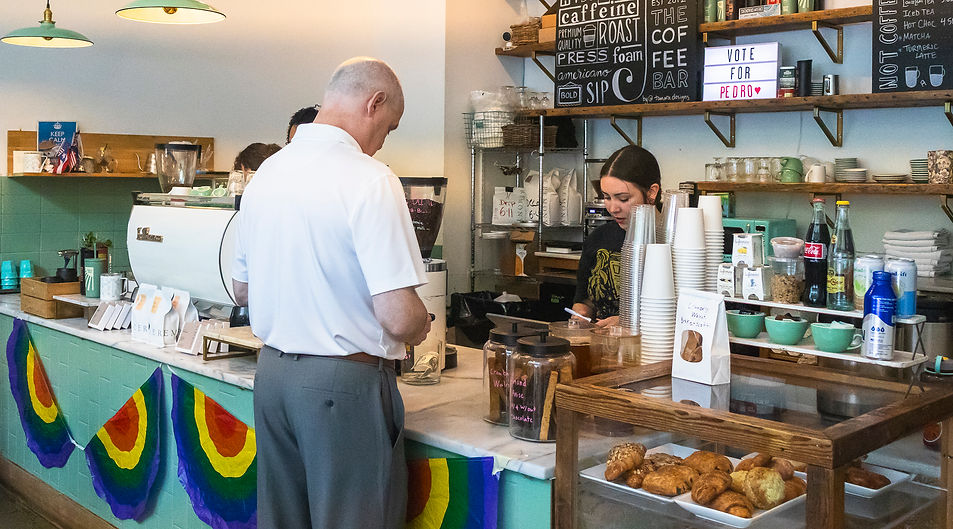
WASHINGTON D.C., JUNE 18 – Order Up: A customer orders a beverage in the middle of the workday at The Coffee Bar in downtown Washington, D.C. Photo credit: Anna Payne
The in-person work presidential memorandum, issued on Jan. 20, 2025, led to the termination of remote work arrangements in the executive branch of the government. January 2025 marked the highest percentage of office occupancy since March 2020, at 52%, according to The Washington Post.
Kastle Systems reported that office occupancy is slowly rising; last week in Washington, D.C., occupancy peaked at 64% on Tuesday, June 10. The rise in office occupancy is impacting local business owners like Cait Lowry, owner of The Coffee Bar in downtown D.C. She shared that small businesses have a different connection with the community than their chain counterparts.
“It's so meaningful to have small businesses in the city,” Lowry said. “I think small businesses are able to connect to their local community like chains can't.”
Lowry expressed that people working remotely or at home affect small businesses in the city, which almost led to her shutting down one of her two locations in Washington, D.C.
“It was kind of really up in the air whether or not we were going to reopen, and ultimately it was decided that, ‘Yes, let’s do it,’” she said. “It’s definitely not like how it was pre-2020. People are still working remotely; Mondays and Fridays are our slowest days.”

The infographic above shows the increase in consumer expenditure as well as the increase in office occupancy in Washington, D.C. Click on the infographic for a closer look.
Katie Ireland, who works 9-to-5, five days a week in Fairfax County, said that she noticed a change in her spending habits on the days she works in the office.
“I have definitely seen an increase in getting coffee on the way to work,” Ireland said. “And then I don’t pack my lunch, even though I should.”
Ireland also worked a remote internship last summer and has noticed a difference in the amount she spends on coffee now that she works an in-person full-time job.
“I don’t think that I spent as much money on lunches because I was able to make it, you know, on my own,” she said. “So, it was definitely more sporadic than it is now.”
As in-person work continues to rise, Ireland expressed an interest in getting back outside, which is her reason for wanting to buy lunch or coffee during the workweek.
“I get an hour break for lunch, I don’t want to just stay in the office, I want to get out.”